
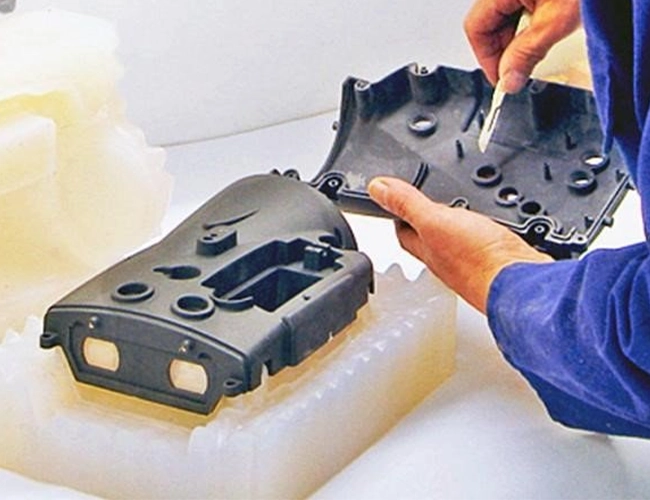
The buyer needs an approved quantity, but the expected output from each silicone mould is uncertain. If mould yield is overestimated, delivery and cost can change late in the project. This article explains how vacuum casting process should be evaluated from the customer-problem, engineering-decision and commercial-buyer perspectives. It also shows what information should be shared with a professional manufacturing partner so the quotation, process and final part are aligned with the real project objective.
Vacuum casting process is most useful when it is selected around a real engineering and commercial objective. This guide explains the practical decisions product teams, engineers and procurement teams should make before approving the next manufacturing step.
Why Mould Life Matters
Project-specific feasibility, material and quantity questions can be shared through the Excel Rapidtech contact page.
When buyers request 20, 50 or 100 cast parts, they often assume that a single silicone mould will produce the entire batch. In practice, mould life is not a fixed number. It depends on the geometry, resin, surface detail, curing cycle, demoulding stress and the quality standard expected from every part.
What Happens to a Silicone Mould over Time
Each casting cycle exposes the mould to heat, chemical interaction, flexing and mechanical stress during demoulding. Fine edges can soften, parting surfaces can wear and high-detail textures can lose sharpness. A mould may continue producing parts, but the later parts may no longer meet the original cosmetic or dimensional requirement.
Geometry-Related Factors
Deep undercuts, thin projections, sharp ribs and complex internal features place more stress on the mould. Large flat parts may also distort the silicone during handling. A simpler part with a well-planned split line generally allows easier demoulding and more consistent cycles than a part that must be stretched aggressively.
Material and Curing Factors
Different casting resins generate different levels of heat and interact with silicone in different ways. The chosen material simulation, wall thickness and cure schedule can influence mould wear. This is why mould life should be estimated for the specific project rather than copied from a generic range.
Quality Level Changes the Answer
A mould may still release parts after visible wear begins, but those parts may not be acceptable for a premium cosmetic sample. For a hidden internal component, minor surface changes may be acceptable. For a customer-facing enclosure, the same change may require a new mould.
How Buyers Should Review a Quotation
The quotation should make clear how many moulds are expected, whether the first mould is included, how replacement moulds are priced and what quality criteria will be used to decide that a mould has reached the end of its usable life. Buyers should also confirm whether rejected parts are included in the planned yield.
Planning a Reliable Batch
A good production plan does not assume perfect output from every cycle. It accounts for mould preparation, trial castings, inspection, possible rejects and the number of approved parts required. When the quantity is important for an event, trial or launch, build a small buffer into the schedule.
Excel Rapidtech's Role
Excel Rapidtech can assess the CAD geometry, surface requirement and target quantity before estimating the mould strategy. This allows the project to be quoted around approved output rather than an unrealistic assumption about one mould producing an unlimited number of parts.
Key Engineering Factors to Evaluate
For a detailed overview of the manufacturing route, review Excel Rapidtech's vacuum casting services.
The following factors should be reviewed together. Optimising one in isolation can create a new problem elsewhere in the project.
- Undercuts and demoulding stress. Define the requirement in measurable terms and explain how it affects the intended test, assembly or production decision.
- Resin exotherm and cure cycle. Define the requirement in measurable terms and explain how it affects the intended test, assembly or production decision.
- Surface-detail requirement. Define the requirement in measurable terms and explain how it affects the intended test, assembly or production decision.
- Part size and wall thickness. Define the requirement in measurable terms and explain how it affects the intended test, assembly or production decision.
- Acceptable cosmetic degradation. Define the requirement in measurable terms and explain how it affects the intended test, assembly or production decision.
Practical Comparison Framework
| Decision area | Option or condition A | Option or condition B |
|---|---|---|
| Geometry | Simple split and easy release | Deep undercuts and fragile projections |
| Surface standard | Internal or hidden part | High-gloss customer-facing surface |
| Resin interaction | Lower heat and easier release | High exotherm or aggressive demoulding |
| Inspection | Basic dimensional acceptance | Tight cosmetic and dimensional control |
| Planning impact | More predictable yield | Additional moulds may be required |
How the Complete Vacuum Casting Workflow Affects the Result
The process begins before resin is poured. CAD review determines whether undercuts, thin walls and trapped regions are suitable. The master pattern establishes geometry and surface quality. Silicone mould planning controls the split, gates and vents. Material preparation, vacuum handling, cure and demoulding then determine whether the copy is complete and stable. Finally, trimming, finishing and inspection convert the casting into an approved part. A weakness at any stage can appear as a dimensional, cosmetic or delivery problem later. Buyers should therefore evaluate the workflow as an integrated chain rather than treating casting as a single machine operation.
Cost and Lead-Time Drivers That Should Be Discussed Early
Cost is influenced by master-pattern production, surface preparation, mould complexity, number of moulds, resin, colour, finishing, inspection and approved quantity. Lead time is affected by CAD clarification, master approval, silicone curing, trial castings and any rework required before the batch begins. Urgent projects benefit from a complete brief and fast approval process, not from skipping controls. The quotation should state assumptions so both parties understand what will change the price or schedule.
Information to Share with the Service Provider
When the design is still changing, compare this route with professional 3D printing services in India before committing to a batch process.
Provide a STEP file where possible, the required approved quantity, the purpose of the parts, colour and finish expectations, critical dimensions, mating components and the planned test environment. Identify cosmetic faces and areas where flash or a parting line would be unacceptable. State whether the batch is for internal engineering, customer trials, an exhibition or limited sale. This context allows the provider to plan the master, mould and inspection standard around the actual outcome.
How to Evaluate a Vacuum Casting Quotation
Check whether the quotation includes the master, master finishing, silicone moulds, trial pieces, approved parts, colour, post-processing and dimensional inspection. Ask how mould replacement will be handled if the first mould does not support the whole batch. Confirm what constitutes an acceptable part and how rejected pieces affect quantity. A lower price can reflect fewer finishing or inspection steps, so compare scope rather than only totals.
A Step-by-Step Decision Framework
- Define the business decision the part must support. Examples include design approval, fitment validation, customer trial, tooling release or a limited pilot batch.
- Identify the technical risks. Mark interfaces, critical dimensions, loads, environmental exposure, visible surfaces and features that may fail during assembly.
- Select the process around those risks. Compare geometry, material behaviour, quantity, finish and design stability rather than choosing only by familiarity or lowest price.
- Agree on acceptance criteria. State what will be measured, assembled, tested or visually approved before the part is accepted.
- Control revisions and approvals. Use a clear file number, record feedback and freeze the approved version before the next manufacturing stage.
Common Mistakes to Avoid
- Treating mould life as a guaranteed universal number.
- Ignoring trial castings and rejected pieces.
- Assuming late-cycle cosmetic wear is acceptable.
- Not defining who pays for replacement moulds.
- Scheduling a launch with no production buffer.
How Excel Rapidtech Can Support the Project
High-detail masters and visual prototypes may be produced through SLA 3D printing when the geometry and surface requirement are suitable.
Excel Rapidtech can review the CAD model, application, quantity, material expectation, finish and critical dimensions before recommending a suitable route. For this topic, the primary commercial resource is the vacuum casting process page at https://excelrapidtech.com/services/vacuum-casting/. The company's wider service structure also allows relevant projects to be considered across 3D printing, SLA, SLS, vacuum casting, CNC machining, design support and post-processing rather than being forced into one method.
The recommendation should remain factual and project-specific. Final tolerance, material performance, mould yield, delivery and compliance depend on the approved design, selected material, process plan and documented acceptance criteria. These points should be confirmed during technical review and quotation.
Conclusion
Functional nylon components and complex unsupported shapes may be evaluated through SLS 3D printing for relevant applications.
The right use of vacuum casting process begins with a clearly defined problem and ends with an evidence-based manufacturing decision. Buyers should connect design maturity, geometry, material behaviour, quantity, finish, inspection and commercial risk instead of selecting a process only by unit price. A detailed brief makes quotations more comparable and helps the manufactured part answer the question it was created to test. Share your CAD file, required quantity, application, critical dimensions and finish expectations with Excel Rapidtech for a technical feasibility review.
Ready to discuss your part?
FAQs
How many parts can one vacuum casting silicone mould produce?
Mould life is not a fixed number. It depends on the geometry, resin, surface detail, curing cycle, demoulding stress and the quality standard required, so it should be estimated for the specific project rather than copied from a generic range.
What causes a silicone mould to wear over time?
Each casting cycle exposes the mould to heat, chemical interaction, flexing and mechanical stress during demoulding. Fine edges can soften, parting surfaces can wear and high-detail textures can lose sharpness.
Which geometries reduce mould life?
Deep undercuts, thin projections, sharp ribs and complex internal features place more stress on the mould. A simpler part with a well-planned split line allows easier demoulding and more consistent cycles.
Does the required quality level change how many parts a mould can produce?
Yes. A mould may keep releasing parts after visible wear begins, but those parts may no longer meet a premium cosmetic standard, even though minor surface changes could be acceptable for a hidden internal component.
What should buyers check in a vacuum casting quotation?
How many moulds are expected, whether the first mould is included, how replacement moulds are priced, the quality criteria used to decide that a mould has reached the end of its usable life, and whether rejected parts are included in the planned yield.
How should a reliable batch be planned?
Account for mould preparation, trial castings, inspection, possible rejects and the number of approved parts required, and build a small buffer into the schedule when the quantity matters for an event, trial or launch.
Related Reading
- Can Vacuum-Cast Parts Be Used for Functional Testing and Customer Trials?
- Why Bubbles, Voids and Surface Defects Occur in Vacuum-Cast Parts
- How to Prepare a Master Pattern for Accurate Vacuum-Cast Parts
- Vacuum Casting vs Injection Moulding: Which Process Is Better for Your First 100 Parts?
- How to Select the Right Material for Vacuum-Cast Functional Prototypes