
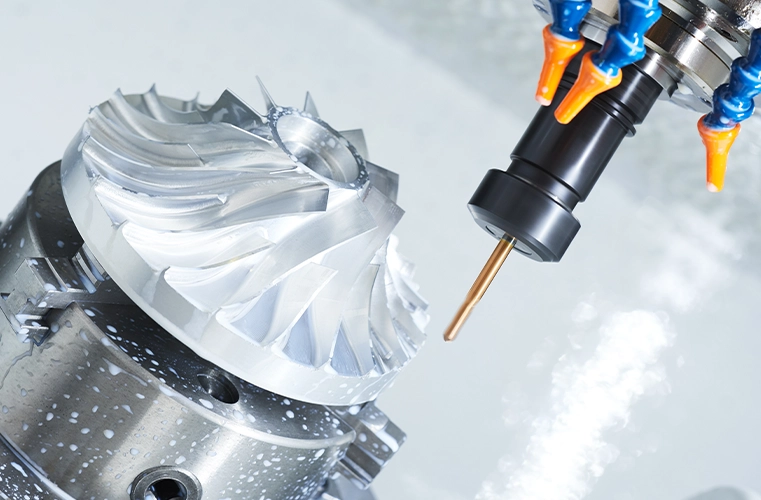
Develop railway, metro and transportation hardware through a manufacturing route matched to the project stage. Excel Rapidtech supports equipment manufacturers, rolling-stock developers, maintenance teams and mobility suppliers with industrial 3D printing, CNC machining, vacuum casting, reverse engineering and finishing for prototypes, tools and low-volume parts.
Upload your authorised CAD model or non-sensitive part information to request a railway component process review.
What is railway component prototyping?
Railway component prototyping is the manufacture of physical parts or assemblies used to assess design, fit, ergonomics, installation, maintenance, appearance or selected functional requirements before production or fleet introduction. It can include passenger-interior components, equipment housings, test fixtures, maintenance tools and authorised obsolescence replacements.
Rail products operate in a demanding system. Vibration, fire behaviour, smoke and toxicity, passenger interaction, cleaning, UV, temperature and long service lives can influence design decisions. A rapid-manufactured part can provide valuable evidence, but it does not bypass railway standards, operator approval, fire testing or configuration control.
India’s National Strategy on Additive Manufacturing promotes digital manufacturing, indigenous product development and collaboration across research and industry. Read the official Government of India announcement. For rail organisations, rapid manufacturing is especially relevant to low-volume development, specialised tools and long-life equipment where original tooling may be unavailable.
Railway and mobility products we can help prototype
Passenger-interior components
Physical prototypes can help teams assess reach, appearance, accessibility and assembly. Candidate products include seat accessories, armrest components, handles, bezels, vent grilles, light housings, signage holders, table features, trim panels, latches and control interfaces. Resin printing may suit detailed appearance models, while SLS or MJF may suit functional nylon trials.
Driver-cab and control-equipment parts
Cab development can involve display bezels, switch panels, control knobs, equipment covers, document holders, ventilation parts and mounting brackets. Prototypes allow operators and engineers to evaluate line of sight, access and use with gloves. CNC machining can support robust faceplates and specified material parts; finishing can support labels and visual review.
Electrical and communication enclosures
Rail vehicles and stations contain monitoring, communication, signalling and passenger-information equipment. Candidate prototype products include equipment housings, connector panels, sensor covers, cable-routing aids, antenna mounts and protective shrouds. Electrical safety, EMC, ingress and fire requirements must be validated for the complete product.
HVAC ducts and airflow components
Complex ducts, vents, nozzles and fan shrouds can be difficult to fabricate conventionally during development. Additive manufacturing can support fit and airflow studies with curved routes and integrated mounting features. Material removal, surface condition, temperature and flame requirements must be considered before functional use.
Maintenance tools and depot fixtures
Rail maintenance teams may need drill guides, alignment aids, protective caps, inspection nests, gauge holders, cable-forming tools, component trays and ergonomic handling aids. These products can be produced in low quantities and revised after depot feedback. Metal bushings or machined datum features may improve wear resistance.
Scale models and system demonstrations
Detailed train, station or equipment models can support design reviews, training and stakeholder communication. Large assemblies may be divided into printable sections, joined and painted. Cutaway models can explain internal systems. Demonstration models should be marked when they are not functionally representative.
Authorised legacy and replacement parts
Long fleet lives create obsolescence challenges. Reverse engineering may support suitable covers, knobs, brackets, ducts, clips and maintenance tools when CAD or tooling is unavailable. The recovered geometry must account for source-part wear, fleet configuration and mating interfaces. Safety-critical components require specialised engineering and operator approval.
Production jigs and assembly aids
Rolling-stock production can use locators, drill templates, checking fixtures, bonding tools, protective supports and ergonomic handling devices. Printed tools can reduce mass and integrate complex contact surfaces. The tool designer should define loads, datums, cycle count and inspection method.
Excel Rapidtech capabilities for railway development
| Service | Where it fits | Example railway products |
|---|---|---|
| SLA 3D printing | Fine-detail and smooth appearance models | Cab controls, interior bezels and presentation components |
| DLP 3D printing | Detailed small resin parts | Buttons, small fittings and miniature model features |
| SLS 3D printing | Complex functional nylon parts | Ducts, clips, covers, brackets and tooling bodies |
| MJF 3D printing | Durable prototypes and low-volume parts | Enclosures, fixtures, vent components and cable guides |
| Metal 3D printing | Complex metal development concepts | Specialised brackets, compact hardware and tool features |
| CNC machining | Controlled features in plastics and metals | Panels, mounts, plates, shafts and test components |
| Vacuum casting | Small repeated polymer sets | Interior samples, seals, grips and appearance parts |
| Reverse engineering | Authorised recovery of legacy geometry | Obsolete covers, knobs, ducts and depot tools |
| Post-processing | Visual finish and assembly | Painting, joining, surface treatment and screen printing |
How to select a process for rail prototypes
Begin with the approval boundary
Identify whether the part is a visual model, ergonomics sample, depot tool, engineering test item or candidate vehicle component. A model used in a conference room has different evidence requirements from an item installed in a passenger area.
Use additive manufacturing for low-volume complexity
3D printing can create ducts, conformal fixtures, clips and detailed models without conventional tooling. SLA and DLP favour visual detail. SLS and MJF support functional nylon components. Metal printing can support selected complex metal studies. Process limitations must be recorded.
Use CNC machining for controlled material and interfaces
CNC is useful for metal panels, mounting plates, robust brackets and precision interfaces. It can also machine engineering plastics. Tool access, internal corner radii and workholding affect the design and quotation.
Use vacuum casting for repeated samples
Vacuum casting can provide a small series of similar polymer parts from a finished master. It may suit interior components, seals, grips and appearance sets. The properties of cast polyurethane must be assessed against the intended test and should not be assumed to match a final moulded railway resin.
Consider a hybrid assembly
A cab-control prototype might combine a CNC faceplate, printed internal mounts, vacuum-cast buttons and screen-printed labels. A depot fixture might combine a printed conformal body with machined bushings. Hybrid routes allocate cost and performance where they matter.
A controlled railway prototype workflow
1. Define system and fleet context. Identify vehicle type, equipment location and applicable configuration. 2. State the prototype purpose. Separate visual review, fit check, installation trial, tooling and functional testing. 3. Provide controlled data. Share revision-identified CAD, drawings, quantity and authorised reproduction information. 4. Specify environment. Include vibration, temperature, UV, cleaning chemicals, passenger contact, fire and smoke requirements. 5. Review design for manufacture. Examine walls, supports, tool access, joins, inserts, finish and inspection. 6. Manufacture and identify. Mark prototypes and revisions where mix-up could cause risk. 7. Trial under operator controls. Evaluate fit, maintenance access and function according to the approved plan. 8. Update configuration records. Record findings and ensure only released revisions progress.
What to include in a railway component RFQ
- Customer, programme and authorised point of contact.
- Part number, revision, drawing and 3D CAD.
- Vehicle, station or depot application.
- Prototype category and intended test.
- Quantity and expected repeat demand.
- Material properties and applicable specifications.
- Temperature, vibration, UV, chemicals and cleaning exposure.
- Fire, smoke, toxicity, electrical and ingress considerations.
- Critical datums, tolerances and inspection requirements.
- Finish, colour, marking and packaging.
- Configuration-control and documentation expectations.
If exact system details are sensitive, a simplified envelope may be used for initial discussion. Complete controlled information should be transferred only after appropriate arrangements are established.
Reverse engineering for rail obsolescence
Obsolescence work should begin with fleet configuration, not only a loose sample. The physical part may have worn, shrunk, cracked or been modified during service. Mating features, drawings, photographs and functional requirements help reconstruct design intent. Material identification may be necessary.
The new CAD model should be reviewed for the selected manufacturing process. A formerly moulded clip may require different reinforcement when printed. A cast bracket may need geometry changes for CNC access. The rail operator or design authority must approve changes and determine required testing. Reverse engineering is a tool for recovering information, not evidence of automatic interchangeability.
Quality and compliance boundaries
Excel Rapidtech should list railway certifications, approved-supplier status, fire-tested materials and inspection accreditations only when documented. Generic phrases such as “railway grade,” “fireproof” or “approved for rolling stock” are not adequate specifications.
The customer remains responsible for system safety, applicable railway standards, fire and smoke performance, EMC, structural validation, passenger safety and operator approval. Prototype status should be visible where an unapproved part could be mistaken for released hardware.
Why choose Excel Rapidtech?
Excel Rapidtech provides named industrial additive capacity alongside CNC machining, vacuum casting, reverse engineering and finishing. Its E Plus A800 SLA system has a documented 800 × 800 × 550 mm build envelope and stated 100-micron layer thickness for sizeable interior models, panels and master patterns. Its EOS P396E SLS system has a documented 340 × 340 × 600 mm envelope for suitable ducts, covers, tools and nylon development components.
Published SLS materials include PA12, glass-filled PA12 and PA11. Vacuum-casting capacity is stated at up to 1000 × 700 × 650 mm, which may support repeated interior or equipment samples before production tooling. Fire, smoke, toxicity and railway approval must be established using exact material evidence and programme testing; general material-category names are not sufficient. See the current Excel Rapidtech infrastructure details.
This process range allows rail teams to match each part to its engineering objective. A project can progress from a large visual model to a functional nylon installation trial, machined interface or small cast set while retaining clear configuration and approval boundaries.
Frequently asked questions
Can Excel Rapidtech reproduce obsolete railway parts?
Authorised covers, knobs, ducts, brackets, clips and maintenance tools may be reviewed. Source-part wear, fleet configuration, material and safety relevance must be assessed. The operator or design authority remains responsible for approval and installation.
Can you make railway interior prototypes?
Yes, candidate products include bezels, handles, vent components, seat accessories, light housings and control models. The process depends on whether the requirement is visual, ergonomic or functional. Passenger-area fire and safety requirements require separate evidence.
Are 3D-printed parts approved for use on trains?
No approval should be assumed. A printed prototype is manufactured to an agreed process and specification. The operator and design authority must complete material qualification, testing and release required for the intended installation.
Can you produce depot tools and fixtures?
Excel Rapidtech can review alignment aids, drill guides, inspection nests, protective caps and handling tools. Provide loads, datums, cycle count, wear surfaces and operating environment. Metal inserts may be recommended.
Which process suits an HVAC duct prototype?
SLS or MJF may suit complex nylon duct geometry, while SLA can suit a smooth visual or flow model. CNC or hybrid methods may support interfaces. Temperature, airflow, cleaning and fire requirements determine whether the part is suitable beyond a fit check.
Can parts be painted and marked?
Post-processing options include painting, joining, surface treatment and screen printing. Provide colour, gloss, artwork, masking and identification requirements. Prototype markings should help prevent confusion with released parts.
Discuss a railway or transportation component
Send Excel Rapidtech your authorised CAD model, drawing, quantity, application and prototype objective. The team can review a suitable route for passenger-interior models, enclosures, ducts, depot tools, fixtures and low-volume parts.
Primary CTA: Upload Your Railway Component CAD Secondary CTA: Request an Obsolescence Review