
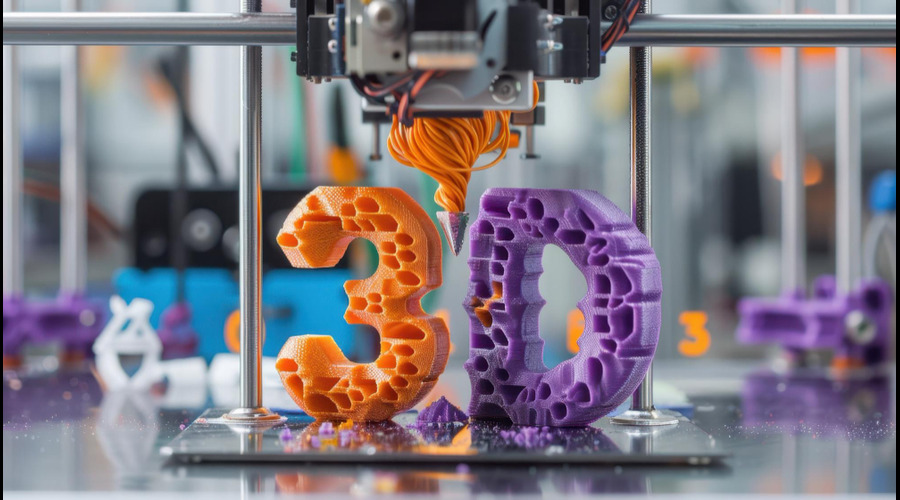
Selecting the right additive manufacturing process is the most critical decision in the product development lifecycle. For engineers and manufacturers, the choice isn't just about making a part. It is about matching material properties, surface finish, and structural integrity to the final application.
At Excel Rapidtech, we operate a high-tech facility in New Delhi that offers a range of industrial 3D printing services. This guide breaks down three primary technologies: SLA, SLS, and DLP, to help you choose the ideal process for your next project.
Quick Answer
The right additive manufacturing process matches material properties, surface finish, and structural integrity to the final application. SLA is the standard for maximum precision and surface finish, SLS for durable functional parts, and DLP for high speed and fine detail on small-format parts.
Why Choosing the Right Technology Matters
- The choice determines whether the part meets its real purpose, not just whether it can be printed.
- Surface finish, durability, accuracy and moving-part capability change completely between SLA, SLS and DLP.
- A correct process match avoids rework, failed functional tests, and wasted spend on parts that cannot survive the application.
- Industrial-grade machines and materials decide repeatability and mechanical consistency across the build volume.
Where Excel Rapidtech Fits
Choosing a technology is only half the battle; you also need a 3D printing provider who can execute the end-to-end 3D printing services required for industrial success.
- Technical Consultation: our engineers in Okhla, New Delhi, help you choose the process that fits your budget and mechanical needs.
- Quality Assurance: from the EOS P396 for nylon to the E Plus A800 for resin, we use only industrial-grade systems.
- Post-Processing: we offer full finishing services, including surface finishing, painting, and assembly.
Don't guess on your engineering projects. Let our team perform a technical feasibility review of your design to find the perfect fit between SLA, SLS, or DLP.
SLA: For Maximum Precision and Surface Finish
If your primary requirement is aesthetic perfection or the highest level of dimensional accuracy, SLA 3D printing is the industry standard.
- The Technology: uses a UV laser to cure liquid resin into a solid plastic layer by layer.
- Our Infrastructure: the E Plus A800, a large-format industrial 3D printing system that ensures isotropic strength and watertight properties.
- Best Used For: concept models and high-fidelity aesthetic prototypes; master patterns for vacuum casting (silicone molding); parts requiring an injection-molded look without heavy post-processing.
- Material Highlight: ABS-like resins that offer a smooth, milky-white or clear finish.
SLS: For Durable, Functional Parts
When your parts need to survive end-use applications, mechanical testing, heat, or environmental stress, SLS 3D printing is the superior choice for industrial rapid prototyping in India.
- The Technology: a high-power CO2 laser sinters (fuses) polymer powder (Nylon) together. Because the part is surrounded by unsintered powder, no support structures are needed.
- Our Infrastructure: powered by the EOS P396, ensuring consistent mechanical properties across the entire build volume.
- Best Used For: functional prototypes and end-use industrial components; complex geometries with internal channels or moving assemblies; jigs, fixtures, and lightweight structural parts.
- Material Highlight: PA-12 Nylon and 30% Glass-Filled Nylon for extreme rigidity.
DLP: For High Speed and Fine Detail
DLP technology is a resin-based process similar to SLA, but it uses a digital light projector screen to cure an entire layer of resin at once.
- The Technology: by projecting a single image of the entire layer, DLP 3D printing can achieve breakneck print speeds while maintaining microscopic detail.
- Best Used For: small-format parts that require high resolution and intricate features; intricate components for electronics, medical devices, or jewelry master patterns; quick-turnaround prototypes where speed is the priority.
- Why Choose DLP at Excel Rapidtech: it bridges the gap between the precision of SLA and the need for rapid iteration in small-scale, highly detailed parts.
Comparison
| Feature | SLA | SLS | DLP |
|---|---|---|---|
| Surface Finish | Excellent (Smooth) | Matte (Grainy) | Excellent (Fine) |
| Durability | Moderate | High | Low-Moderate |
| Moving Parts | No | Yes | No |
| Accuracy | Highest | Good | High |
| Best For | Aesthetic parts, design validation | Functional and durable parts | Fine Details |
Step-by-Step Workflow
- Define what the part must prove: aesthetic validation, functional testing, or end-use performance.
- Match surface finish needs: SLA and DLP give an excellent finish, SLS gives a matte, grainy surface.
- Match durability needs: choose SLS for high durability under heat, friction and mechanical stress; SLA is moderate; DLP is low-moderate.
- Check whether the design needs moving parts or internal channels: SLS supports them, resin processes do not.
- Match accuracy expectations: SLA offers the highest accuracy, DLP high, SLS good.
- Run a technical feasibility review with the provider before committing to a process.
Common Mistakes to Avoid
- Guessing the technology instead of performing a technical feasibility review of the design.
- Choosing a process for a capability it does not have, such as expecting moving parts or high durability from a resin process.
- Judging SLS on cosmetic finish without planning post-processing for a matte, grainy surface.
- Selecting by price alone while ignoring the mechanical and environmental demands of the application.
What to Measure
- Surface finish required: excellent and smooth (SLA), matte and grainy (SLS), or excellent and fine (DLP).
- Durability required: moderate, high, or low-moderate.
- Whether the design has moving parts or internal channels: only SLS supports them.
- Accuracy required: highest, good, or high.
- Application type: aesthetic parts and design validation, functional and durable parts, or fine details.
Conclusion
Choosing a technology is only half the battle; you also need a 3D printing provider who can execute the end-to-end 3D printing services required for industrial success. Don't guess on your engineering projects. Let our team perform a technical feasibility review of your design to find the perfect fit between SLA, SLS, or DLP.
Ready to discuss your part?
FAQs
What is SLA 3D printing best used for?
SLA is best used for concept models, high-fidelity aesthetic prototypes, master patterns for vacuum casting (silicone molding), and parts requiring an injection-molded look without heavy post-processing.
When should I choose SLS 3D printing?
Choose SLS when your parts need to survive end-use applications, mechanical testing, heat, or environmental stress. It suits functional prototypes, complex geometries with internal channels or moving assemblies, and jigs, fixtures, and lightweight structural parts.
What is the difference between SLA and DLP?
Both are resin-based processes, but SLA uses a UV laser to cure liquid resin layer by layer, while DLP uses a digital light projector screen to cure an entire layer at once. DLP achieves faster print speeds while maintaining fine detail, best for small-format parts.
Which technology supports moving parts?
SLS supports moving parts, because the part is surrounded by unsintered powder and no support structures are needed. SLA and DLP do not.
Which technology gives the highest accuracy?
SLA offers the highest accuracy, followed by DLP with high accuracy and SLS with good accuracy.
What materials does Excel Rapidtech use for SLA and SLS?
For SLA, ABS-like resins that offer a smooth, milky-white or clear finish. For SLS, PA-12 Nylon and 30% Glass-Filled Nylon for extreme rigidity.
Related Reading
- 3D Printing Services in India: Complete Guide to Technologies, Materials and Applications
- 3D Printing Services in India: SLA vs SLS vs MJF vs DLP
- End-to-End 3D Printing Services for Engineers and Manufacturers
- How Gurgaon Product Companies Can Choose Between SLA and SLS Prototyping
- 3D Printing Services in India: Cost, Lead Time and RFQ Checklist